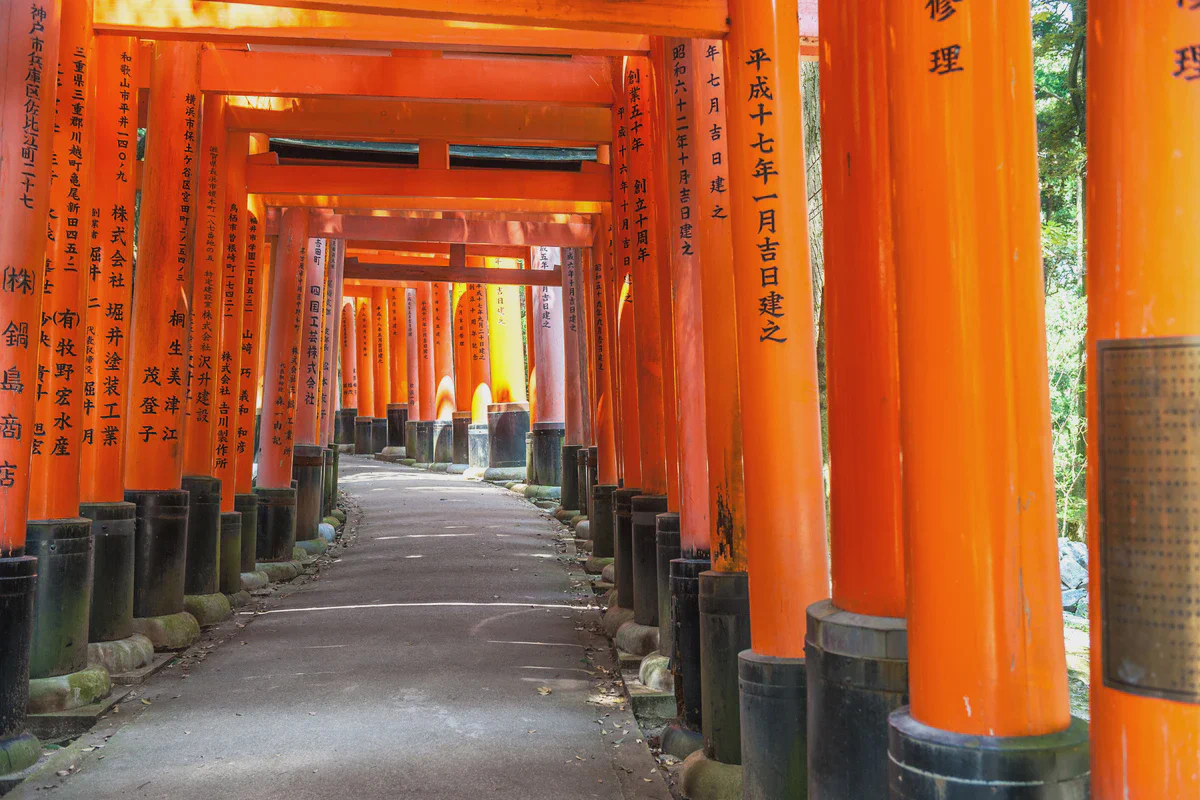
Winter in Japan depends on latitude and topography. While overseas visitors imagine a nationwide snowscape, Tokyo averages just 4 cm of snow in January and enjoys crisp, clear skies with daytime highs around 9.8°C. Sapporo, by contrast, receives 116 cm in February with temperatures hovering near freezing. To find deep powder, frozen cedar forests, and hot springs steaming under heavy snow, you need to head into the mountains of Nagano, Gunma, Yamagata, or up to Hokkaido.
How cold it gets
Official climate data highlights the stark divide across the main island. In January, Tokyo reaches a mild 9.8°C in the afternoon and drops to 1.2°C overnight. Nagano dips to 3.8°C by day and minus 3.9°C at night. Further north in Sapporo, February temperatures average a daytime high of 0.4°C and drop to minus 6.2°C, with snowfall recorded on roughly 25 days of the month. The sun sets around 16:50 in early February, leaving little daylight for sightseeing.
Packed snow on urban pavements quickly turns to polished ice. Last winter, Sapporo’s fire department recorded 2,060 ambulance dispatches for pedestrians slipping on icy streets. Local authorities recommend walking flat-footed with small, deliberate steps rather than striking with the heel. Standard trainers are treacherous. Deep-tread winter boots make a difference, and rubber slip-on spike grips sell for around ¥1,000 at 7-Eleven, Lawson, and station kiosks.
The Sapporo Snow Festival
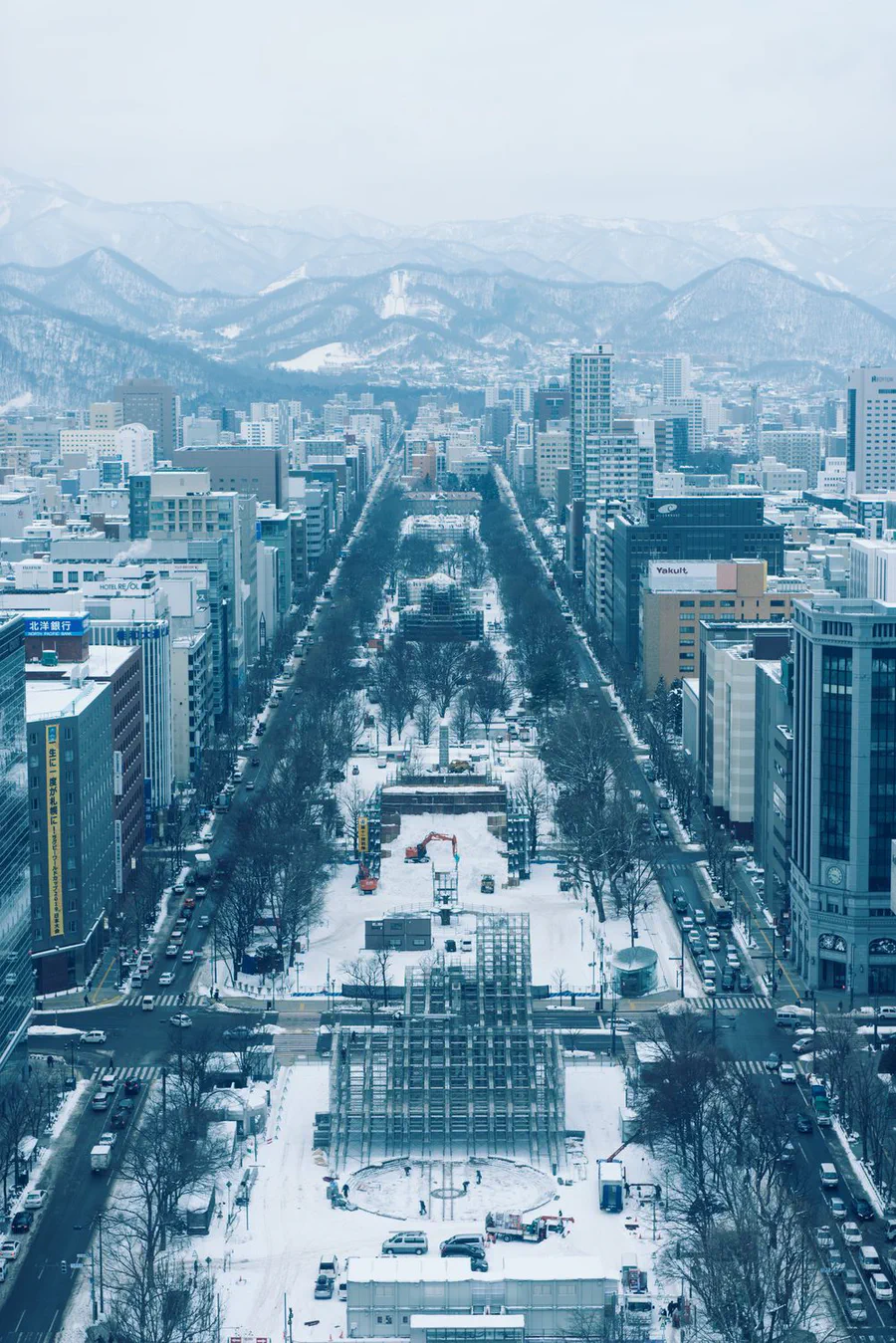
The 77th festival runs from Thursday 4 February to Thursday 11 February 2027 across three distinct sites, all free to enter. Massive snow sculptures up to fifteen meters tall occupy eleven blocks of Odori Park in the city center. You can walk through the park at any hour, with illuminations switched on until 22:00 each evening. A short walk south, crystal ice carvings line the entertainment streets of Susukino under neon lights until 23:00. Families with children usually head out to the Tsudome site, where snow slides and an indoor heated sports arena operate from 10:00 to 16:00.
Attendance is immense. The 2026 festival logged approximately 2.5 million visits across Odori and Tsudome, while Susukino tracked another 1.4 million. Organizers publish exact event programming and vendor details in mid-December.
Transit from New Chitose Airport is straightforward. The Rapid Airport train runs six times an hour, reaching Sapporo Station in 37 minutes for ¥1,230. If you have extra time in Hokkaido, take the 35-minute train ride west to Otaru, where floating glass lanterns and illuminated snow sculptures light up the historic canal during the Snow Light Path festival from 6 to 13 February.
The snow monkeys at Jigokudani
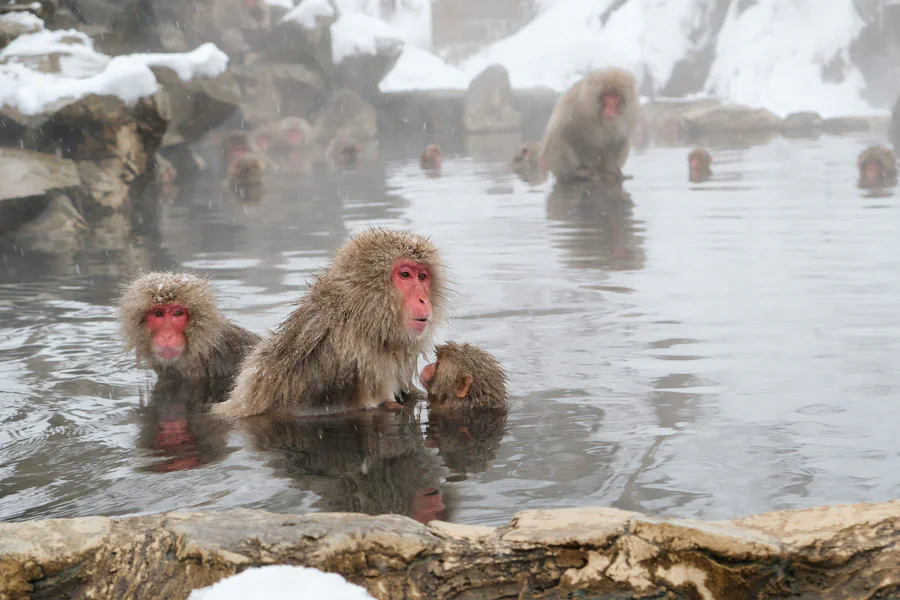
In the forested ravines above Yudanaka, wild Japanese macaques gather to bathe in geothermal springs at Jigokudani Yaen-koen. The peak season runs from December through March when deep snow blankets the gorge. Keep expectations realistic: these are wild animals, not zoo performers. The monkeys do not soak constantly throughout the day, and during milder spells or high winds they sometimes stay up on the mountain ridges entirely.
Reaching the bath requires effort. Visitors must hike a 2 km unpaved forest trail that takes roughly 30 minutes each way through snow and mud. Park rangers strongly advise wearing sturdy winter boots with light crampons or slip-on cleats. The alternative vehicle road from nearby Shibu Onsen is completely closed to cars in winter. The park operates from 09:00 to 16:00 during the winter months, adult admission costs ¥800, and rangers turn away arrivals after 15:30.
Getting there from Tokyo is an easy rail connection. The Hokuriku Shinkansen whisks you to Nagano Station in 80 minutes, fully covered by the Japan Rail Pass. From Nagano, transfer to the private Nagaden train to Yudanaka Station (45 minutes, ¥1,660 plus a ¥100 express surcharge), followed by a short local bus to the Kanbayashi Onsen trailhead. Alternatively, direct express buses run from Nagano Station’s east exit to the trailhead in winter for ¥3,000 each way.
Onsen towns in the snow
Few experiences compare to soaking in an outdoor mineral bath surrounded by snowdrifts, but several famous mountain retreats now enforce strict winter capacity limits.
Ginzan Onsen in Yamagata, famed for multi-story wooden ryokan lining a narrow gas-lit river, draws massive crowds. To curb gridlock, local authorities banned private vehicles for day visitors between 09:00 and 20:00 throughout last winter. Visitors had to park at the Taisho Roman-kan lot outside the valley and take shuttle buses, with evening entry strictly capped and ticketed in advance. Always verify current winter shuttle regulations before organizing an afternoon trip.
In Nagano, Nozawa Onsen pairs deep powder skiing with thirteen communal hot-spring bathhouses. The village records a staggering 366 cm of snowfall in January alone. It also hosts the Dosojin Fire Festival each year on 15 January, one of Japan’s most dramatic winter rites. Because crowds overwhelmed narrow village alleys, recent festival editions restricted viewing areas exclusively to local residents and guests with confirmed overnight lodging in the village.
Further south in Gunma, Kusatsu centers on the steaming Yubatake, a wooden flume network that channels 4,000 liters of acidic spring water per minute through the town square. Night temperatures plunge to an average of minus 7.8°C in January, creating dense clouds of mineral steam. Direct JR buses connect Naganohara-Kusatsuguchi Station to the bus terminal in 25 minutes.
Further north in Yamagata, Zao Onsen combines sulfur baths with the juhyo, or snow monsters. Siberian winter winds freeze airborne water droplets against mountain fir trees, sculpting massive rime-ice figures that peak in size throughout February.
Shirakawa-go’s four evenings
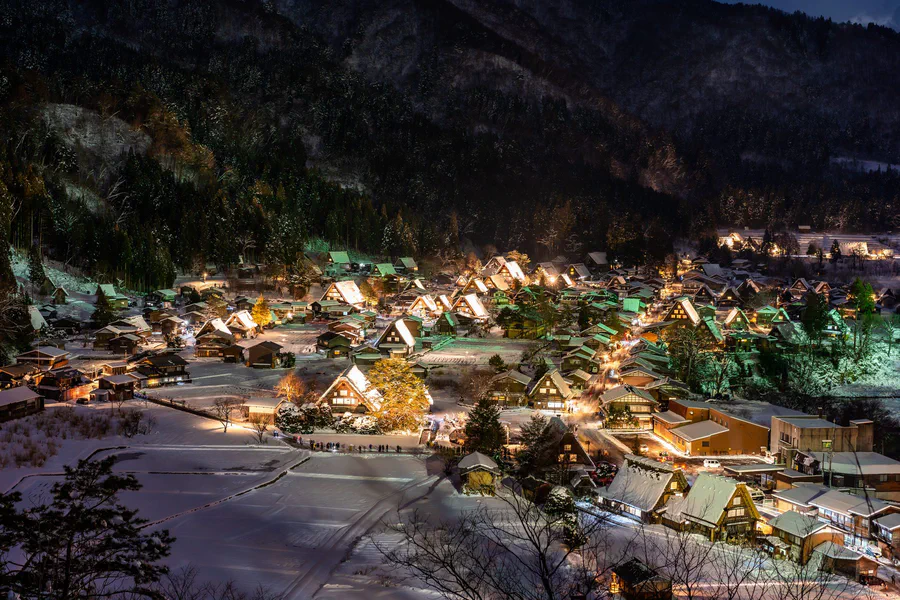
The historic farmhouses of Shirakawa-go illuminate their thatched gassho-zukuri roofs on four Sunday evenings in January 2027: the 11th, 17th, 24th, and 31st, running from 17:30 to 19:30. To protect the resident community from unmanageable crowds, every single visitor must hold a verified advance booking. From 15:30 onward, security gates close the village to anyone lacking a ticketed slot.
Securing entry requires meticulous timing. The initial round of parking permits opened on 10 September and sold out within hours, with a secondary release scheduled for 1 December. Overnight stays in traditional farmhouses are distributed through a strict lottery system, accepting applications in October with results released on 10 November. For day-trippers, official Nohi Bus packages from Takayama cost between ¥13,000 and ¥16,000, releasing tickets online in phased windows between 13 October and 2 November.
Passes and planning
A standard 7-day Japan Rail Pass costs ¥50,000, or ¥53,000 when purchased through overseas agencies from 1 October 2026. It covers the bullet train to Nagano and regional lines across Hokkaido, but excludes private routes like the Nagaden railway and local mountain buses. Our analysis on whether the Japan Rail Pass is worth it helps calculate whether your winter routing justifies the national pass. If your travel centers exclusively on the northern island, the regional JR Hokkaido Rail Pass costs ¥22,000 for five days of unlimited travel.
Using Tokyo as your hub between mountain excursions lets you leave heavy luggage behind. Our guide on where to stay in Tokyo breaks down the best station neighborhoods for early Shinkansen departures.
Dates, hours, and fares verified against official festival, transport operator, and Japan Meteorological Agency records, October 2026.