In Kyoto City’s 2025 visitor survey, more than half of visitors said they had done something on purpose to avoid crowds. Getting up early is the obvious move, so it is no longer a secret. It still works, because most of the temples people queue for do not open until half past eight or later.
The first trains
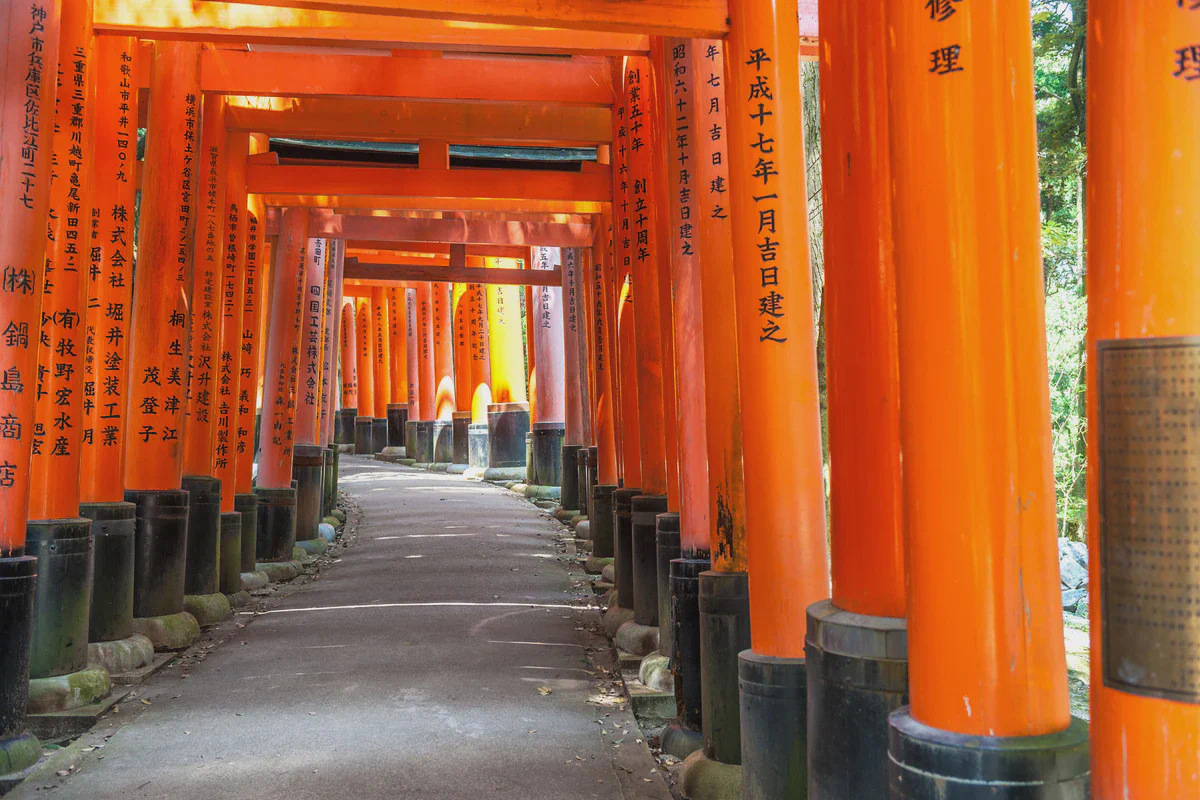
You can be standing at the foot of Fushimi Inari at 05:40. The 05:33 from Kyoto Station reaches Inari in five minutes and costs ¥150.
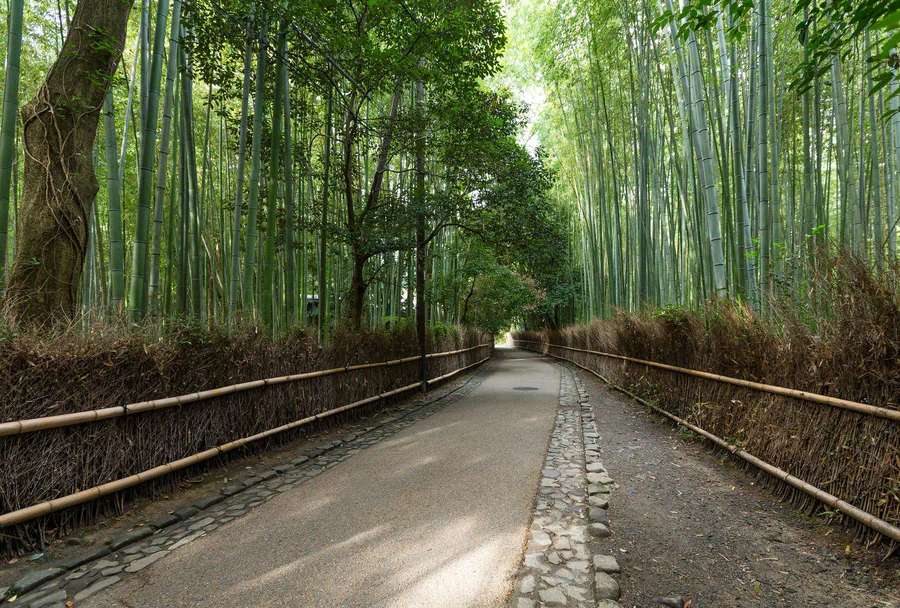
Arashiyama is nearly as easy. The 05:31 from Kyoto Station reaches Saga-Arashiyama at 05:47 and costs ¥240. The bamboo grove is a few minutes’ walk from the station.
For Higashiyama there is a bus, and it is not the one you have read about. City Bus 206 leaves Kyoto Station at 05:31 on weekdays and Saturdays and reaches the Kiyomizu-michi stop at 05:43. Ten minutes uphill from there, you reach the gate just before it opens at six. On Sundays and public holidays the first bus leaves at 06:11. The fare is a flat ¥230.
The tourist express everyone recommends, the EX100 and EX101, starts at 09:04 and runs only on weekends and public holidays. It is no use to you at all before eight.
What opens, and when
| Place | Opens | Adult entry |
|---|---|---|
| Yasaka Shrine | No closing time | Free |
| Bamboo grove, Arashiyama | No gate, no hours | Free |
| To-ji | 05:00 | Grounds free; halls from 08:00, ¥1,200 from 31 October to 13 December |
| Nishi Hongan-ji | 05:30 | Free |
| Fushimi Inari | Ungated in practice | No published charge |
| Kiyomizu-dera | 06:00 | ¥500 |
| Ginkaku-ji | 08:30 (09:00 from December) | ¥1,000 |
| Tenryu-ji garden | 08:30 (07:30 from 14 to 30 November) | ¥500 |
| Nanzen-ji | 08:40 | ¥600 for the Hojo garden |
| Kinkaku-ji | 09:00 | ¥500 |
| Tofuku-ji | 09:00 (Tsutenkyo 08:30 from 14 November) | ¥600 for the Hojo garden; Tsutenkyo ¥600, ¥1,000 from 14 November |
| Sanjusangendo | 08:30 (09:00 from 16 November) | ¥600 |
Two prices in that table changed recently and most pages have not caught up. Ginkaku-ji doubled to ¥1,000 on 1 April 2026, while Kinkaku-ji, run by the same administration, stayed at ¥500. At Tofuku-ji, the Hojo garden is ¥600 from 1 November 2026, up from ¥500, and the Tsutenkyo bridge area, the part everyone comes for, rises to ¥1,000 from 14 November to 6 December. There is no combined ticket in those weeks. To-ji’s rise is seasonal: its halls cost ¥1,200 from 31 October to 13 December, and the ticket includes the ground floor of the pagoda.
The bamboo grove entry needs a note. The path everyone photographs is a public road: no gate, no hours, no admission, and nothing to stop you walking it at five in the morning. A separate city-run walking path nearby is open from 09:00 to 17:00, and that is where some of the confusion online comes from.
Fushimi Inari is the odd one. It is universally described as open around the clock and free, and in practice it is, but the shrine publishes neither an opening time nor an admission charge on its own site in either language. Treat it as observed practice rather than policy.
When the crowds arrive
Kyoto’s crowding is more evenly spread across the year than the internet suggests. The city’s own figures put the gap between its busiest month and its quietest at 1.3 times, November against February. That is a real difference and it is not the tidal wave people describe.
The hourly variation is much sharper than the monthly one, which is the whole argument for getting up.
At 06:30 the lower torii at Fushimi Inari are empty enough to photograph without waiting, and so is the bamboo grove. By eight both have filled. By ten the Arashiyama path is a queue that moves at the pace of the slowest person in it.
Kiyomizu-dera at six gets called the earliest temple in Kyoto, and it is not close. To-ji opens its gates at five and Nishi Hongan-ji at half past. Chion-in and Heian Jingu open at six along with Kiyomizu, Higashi Hongan-ji at twenty past six from November, and Yasaka Shrine does not close at all.
To-ji and Nishi Hongan-ji both hold a morning service at six that anyone can walk into. The Zen temples on the usual list open between half past eight and nine and charge to get in. Late autumn has one exception: from 14 to 30 November, Tenryu-ji opens its garden at 07:30.
The walk up Sannenzaka and Ninenzaka to Kiyomizu is still the part to be early for, more than the temple. Those lanes are lined with shops that open at nine or ten, so before eight you get the architecture without the retail.
Kyoto’s official tourism site runs a congestion map with hourly forecasts for 11 spots in seven areas, plus live cameras. It is more useful than any advice, including this, because it tells you about today.
Two temples that stay quiet
Both have a reason to stay empty that does not depend on nobody having heard of them.
Sennyu-ji is the imperial family’s temple, at the top of a long uphill approach behind Tofuku-ji. Entry is ¥500. It does not take school groups for its special viewings, which matters in a city that received 670,000 school-trip students in 2025. In autumn it also runs an early-morning visit that meets at the great gate at eight. The 2026 dates had not been announced in September, so check before you plan around it.
Otagi Nenbutsu-ji, at the far northern end of Sagano, describes itself as about five minutes by taxi beyond Saga-Arashiyama station. That puts it past the end of the walkable Arashiyama circuit, and the coach flow does not reach it. Its twelve hundred moss-covered stone figures were each carved by a different amateur, starting in 1981. Entry is ¥1,000, and it closes on Wednesdays and Saturdays, which is the detail to check before making the trip out.
Three rules people get wrong
Three of Kyoto’s crowd measures are widely misreported.
The Gion alley signs demanding ¥10,000 are posted by the district council on the private lanes that branch off the public road. They are not a fine. Only a law or an ordinance can set a fine, and no public authority collects this one. Hanamikoji-dori itself remains freely walkable. What does carry real penalties is obstructing traffic, littering, trespass and touching people, which is what the signs are reacting to.
There is no luggage surcharge on Kyoto buses and no enforceable ban. The bus conditions of carriage define the size you may carry free and set no consequence for exceeding it, and the transport bureau says in its own document that enforcing it is impractical.
The two-tier bus fare for residents and visitors that made headlines is planned for the 2027 financial year. The fare ordinance had not gone to the city council by September 2026, so nothing changes for an autumn 2026 trip.
Hours and fees from the temples’ own pages and Kyoto Navi, bus times from the city timetable, September 2026. Fushimi Inari publishes neither.